Source Pesticide Sprayer for Agriculture, Gardening, and Disinfection
Find and compare 30 pesticide sprayer options including knapsack types, trigger sprayers, and agricultural UAVs. Buyers can review specifications like payload, volume, and spraying shapes to select suitable models for insect control and disinfection tasks.
Key considerations
Products List


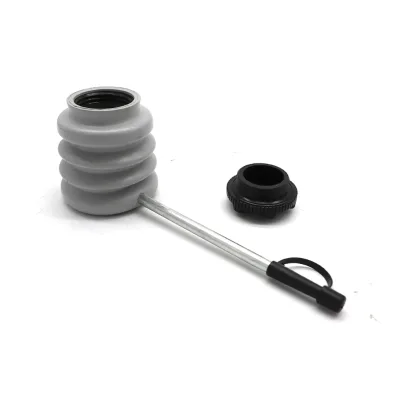


Hot Sales Agruiculture Sprayer
$710.00 - $11000.00
Moq: 1
Shandong Liying Agricultural Technology Development Co., Ltd.


Comprehensive Sourcing Guide
Strategic Sourcing Guide for Pesticide Sprayers
The global agricultural and horticultural sectors rely heavily on efficient pesticide application systems to ensure crop health and yield stability. For procurement professionals, the category of pesticide sprayers encompasses a diverse range of technologies, from handheld knapsack units to advanced agricultural unmanned aerial vehicles (UAVs). Sourcing decisions in this sector require a rigorous understanding of technical specifications, material durability, and operational standards. The following guide outlines the critical factors buyers must evaluate when selecting suppliers and products within this complex market.
Technical Specifications and Performance Metrics
When evaluating pesticide sprayers, the primary focus must be on the technical parameters that dictate operational efficiency. The payload capacity is a fundamental specification that determines the volume of liquid a unit can carry per cycle. Market observations indicate a variance in capacity, with specific models designed for payloads of 5kg and others engineered for 10kg loads. Buyers must align these figures with their specific application requirements; smaller payloads may suffice for precision spot treatments, while larger capacities are essential for broad-acre coverage.
The spraying mechanism and shape are equally critical. Different applications demand distinct spray patterns. Some units are engineered to produce a full cone shape, which is ideal for general coverage and canopy penetration. Conversely, other models utilize a liquid column or a stream/spray configuration, suitable for targeted application or specific nozzle requirements. The control method is another pivotal variable. While traditional manual operation remains common, modern sourcing increasingly involves units with RC (Remote Control) capabilities, particularly in the context of agricultural UAVs. These automated systems offer enhanced precision and reduce labor intensity.
Power supply and operational duration further define the utility of the equipment. Certain manual units rely on human power, whereas others may integrate battery systems with specific duration limits, such as a 25-minute operational window. The physical dimensions of the device, including single package sizes like 24.9x6.1x10.9 cm, are vital for logistics planning and storage. Additionally, the material composition, ranging from PP (polypropylene) to combinations of rubber and metal, directly influences the chemical resistance and longevity of the sprayer against harsh agrochemicals.
Compliance, Standards, and Certification Verification
In the procurement of agricultural equipment, adherence to standards is non-negotiable. Buyers must verify that products meet specific industry standards, which can vary by region and application type. Documented observations include standards such as M6E, M4E-1, and volumetric standards like 16L and 20L. These designations often refer to specific regulatory frameworks or manufacturing tolerances that ensure the equipment functions safely and effectively.
Furthermore, the origin of the product plays a significant role in compliance. A substantial portion of the market originates from China, with specific hubs like Ningbo and Guangdong emerging as key production centers. Buyers should verify that the "place of origin" aligns with the intended market's import regulations. For instance, products labeled with "Eco-Friendly" features must be supported by verifiable data regarding their environmental impact, as this claim can influence procurement in regions with strict sustainability mandates.
Certification checks should extend beyond the product itself to the manufacturing process. While specific certification bodies are not universally listed in general product descriptions, the presence of standards like M6E suggests a level of quality control. Procurement teams must request documentation proving that the manufacturing facility adheres to these standards. It is also essential to confirm that the product's intended use, such as "insect control," matches the regulatory classification in the destination country. Misalignment in use-case classification can lead to customs delays or legal liabilities.
Cost Drivers and Pricing Structures
The pricing landscape for pesticide sprayers is characterized by extreme variance, with observed ranges spanning from $0.05 to $126,800 USD. This wide disparity is driven by several key factors, primarily the complexity of the technology and the scale of the unit. Basic manual sprayers, such as knapsack models or trigger sprayers, typically occupy the lower end of the price spectrum. These units often feature simple mechanisms like blow molding or injection molding and utilize standard materials like PP.
In contrast, high-end agricultural UAVs, such as the Tta M4e model, command significantly higher prices due to their advanced RC control systems, specialized payloads, and complex engineering. The cost is also influenced by the packaging requirements; products shipped in "Box Package" or "Carton" formats may incur different logistics costs compared to those in "1PC/Color Carton" configurations.
Minimum Order Quantity (MOQ) is another critical cost driver. The observed MOQ range extends from 1 unit to 20,000 units. Suppliers with high MOQs, such as those requiring 2,016 pieces for specific hand dusters, often offer lower unit costs but require significant capital commitment. Buyers must balance their budget constraints with their inventory needs. Additionally, the "charger" attribute, listed as "Not Applicable" for certain manual units, indicates that the absence of battery charging infrastructure can reduce the total cost of ownership for specific applications.
Typical Applications and Operational Use Cases
Pesticide sprayers serve a multitude of applications across different sectors. The "Knapsack" type is widely used in small-scale farming and gardening, offering portability and ease of use for manual application. These units are often designed to contain disinfectants, medicines, or cleaning agents, highlighting their versatility beyond just agricultural pesticides. The "Hand Below Duster" is another specialized tool, likely intended for specific dusting applications in confined spaces.
For larger scale operations, the agricultural UAV represents a transformative application. These units, with payloads of 5kg to 10kg and durations of 25 minutes, are designed for efficient, large-area coverage. The "RC Control" feature allows operators to manage the spraying process remotely, reducing exposure to chemicals and increasing precision. The "applicable area" for some units is noted as less than 20 square meters, indicating their suitability for indoor or confined space pest control, while others are designed for open-field agriculture.
The choice of spraying shape further dictates the application. A "Full Cone" shape is optimal for general pest control where broad coverage is needed, whereas a "Liquid Column" or "Stream" might be preferred for targeting specific pests or treating individual plants. Understanding these nuances ensures that the selected sprayer matches the specific operational environment, whether it is a large agricultural field, a greenhouse, or a salon setting for cosmetic disinfection.
Supplier Evaluation and Sourcing Strategy
Evaluating suppliers in the pesticide sprayer market requires a multi-faceted approach. Buyers should prioritize suppliers who provide clear documentation of their production capabilities, including the specific "Technics" used, such as blow molding or injection molding. These manufacturing methods impact the structural integrity and chemical resistance of the final product. Suppliers in regions like Ningbo and Guangdong have established supply chains, but buyers must verify the specific capabilities of the factory rather than relying solely on the region's reputation.
Brand reputation is another factor, though specific brand names like "Shou Xin" should be evaluated based on their track record in the specific product category. Buyers should look for suppliers who offer customization options, as indicated by the "Customization: Available" attribute. This flexibility allows for tailoring the sprayer to specific client needs, such as adjusting the volume capacity or modifying the nozzle configuration.
When assessing suppliers, it is crucial to verify the consistency of their product attributes. For instance, a supplier claiming a "16L" standard should be able to provide evidence of this capacity. Similarly, the "prod_model" identifiers, such as KD-16L-008 or GF-20D-17Z, serve as unique identifiers that buyers can use to track specific product lines and ensure consistency across orders.
Quality Control and Long-Term Procurement Considerations
Quality control is paramount in the pesticide sprayer sector, as failures can lead to crop loss or safety hazards. Buyers should implement a rigorous QC protocol that includes verifying the "Material" composition, ensuring that PP or rubber-metal combinations meet the required chemical resistance standards. The "prod_packing" method, whether box, carton, or color carton, must be inspected to ensure it protects the product during transit and storage.
Long-term procurement considerations involve assessing the durability and maintenance requirements of the equipment. Units with "Internal Threaded Connection" may require specific maintenance protocols to prevent leaks. The "Duration" of operation, such as the 25-minute limit for certain UAVs, dictates the operational workflow and may necessitate the procurement of additional batteries or charging stations.
Buyers should also consider the "Useage" metrics, such as the 10-day operational window noted for certain models, to plan for replacement cycles. The "feature" of being "Eco-Friendly" should be backed by verifiable data to ensure it meets sustainability goals. Finally, the "MOQ" constraints must be managed carefully to avoid overstocking or stockouts, ensuring a steady supply chain that aligns with the buyer's production schedules.
Comparative Analysis of Product Attributes
To facilitate informed decision-making, the following table summarizes key attributes observed in the market, highlighting the diversity of available options.
| Attribute Category | Observation A | Observation B | Observation C |
|---|---|---|---|
| Product Type | Knapsack | Agricultural UAV | Trigger Sprayer |
| Payload Capacity | 5kg | 10kg | Variable |
| Control Method | Manual | RC Control | Manual |
| Spraying Shape | Full Cone | Liquid Column | Stream or Spray |
| Material | PP | Rubber + Metal | PP |
| Standard | 16L | M6E | 28/400 |
| Origin | China | China | Ningbo, China |
| Packing | Carton | Box Package | 1PC/Color Carton |
| Customization | Available | Available | Available |
This comparison underscores the necessity of matching specific product attributes to operational needs. A buyer seeking high-volume field coverage would prioritize the UAV with RC control and a 10kg payload, while a buyer focusing on small-scale disinfection might opt for the knapsack or trigger sprayer with a 5kg payload.
In conclusion, sourcing pesticide sprayers requires a meticulous approach that balances technical specifications, compliance standards, and cost considerations. By leveraging the detailed product attributes and adhering to rigorous quality control measures, procurement professionals can secure reliable equipment that meets the demanding requirements of modern agriculture and pest management. The diversity of the market offers solutions for every scale of operation, provided that buyers conduct thorough due diligence and align their selections with their specific operational goals.
FAQs
What payload capacities are available for pesticide sprayers?
Available payload capacities include 5kg and 10kg units. Buyers should select the 10kg model for broad-acre coverage or the 5kg version for precision spot treatments depending on their specific operational needs.
Which spraying shapes are supported by these agricultural units?
Supported spraying shapes include full cone, liquid column, and stream or spray configurations. The full cone shape is ideal for general canopy penetration, while liquid columns suit targeted applications.
Can I find pesticide sprayers with remote control capabilities?
Yes, agricultural UAV models feature RC control for remote operation. These units offer enhanced precision and reduced labor intensity compared to traditional manual operation methods found in knapsack sprayers.
What materials are used to construct these sprayer units?
Common materials include PP for plastic components and rubber combined with metal for durability. These material choices ensure chemical resistance and longevity against harsh agrochemicals during extended field operations.
How does the minimum order quantity vary for these products?
Minimum order quantities range from 1 unit up to 20,000 units depending on the supplier. Specific models like hand dusters may require a minimum of 2,016 pieces to secure lower unit costs.
What packaging types are used for shipping these sprayers?
Products are shipped in box packages, cartons, or color cartons. The packaging method, such as 1PC/Color Carton, is selected to protect the unit during transit and storage logistics.